California Cognitive Behavioral Institute
Cognitive-behavioral therapy is a psycho-social intervention method that aims to improve mental health. CBT focuses on challenging and changing unhelpful cognitive distortions and behaviors, improving emotional regulation, and the development of personal coping strategies that target solving current problems. At the helm of CCBI is Dr. Kathie Mathis, Psy.D, NCP, DAPA who leads workshops, training, and one-on-one therapy sessions.
The CBT (Cognitive Behavior Therapy) courses presented by Dr. Kathie Mathis offer a detailed, practitioner level look at the subject of CBT, showing to you all the basics you need to learn in order to help people improve their lives. It teaches CBT therapy skills, which will help treat anxiety, depression, addiction problems, and a wide range of other issues faced during counseling and psychotherapy, such as anger, self-esteem, and confidence.
Who Can Benefit From the Cognitive Behavioral Therapy Institute?
Dr. Kathie Mathis’ CBT (Cognitive Behavioral Therapy) training teaches the skills needed for those who want to learn Cognitive Behavioral Therapy for self-help and those who wish to practice CBT for therapy and counseling. These courses are perfect for psychologists, NLP professionals, hypnotherapists, and life coaches who choose to incorporate Cognitive Behavior Therapy to their expertise and strategies tool kit.

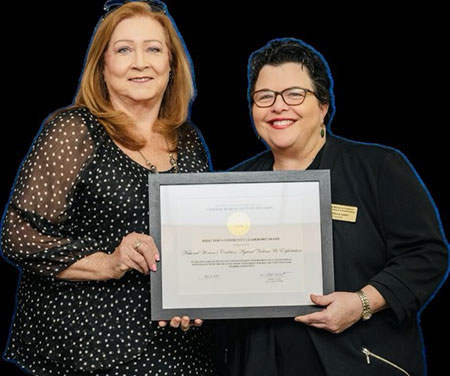
I am honored to be pictured with Michelle Bart, the CEO of the National Women’s Coalition Against Violence and Exploitation. As former Director of the Advocacy Center for Justice, and current Director of Training, I am proud to be nominated for my impactful training, advocacy, and support services for crime victims.
I am deeply humbled to now be an award recipient, recognized by a former President of the United States and the current FBI Director under President Biden. This acknowledgment is a testament to the collective efforts of those who work tirelessly to support victims and advocate for justice.
-Dr. Kathie Mathis
A Podcast with Dr. Kathie Mathis
Dr. Kathie’s Interview on California Woman 411.
How Can Cognitive Behavior Therapy Help With Emotional Addiction
The CBT (Cognitive Behavior Therapy) course presented by Dr. Kathie Mathis offers a detailed, practitioner level look at the subject of CBT, showing to you all the basics you need to learn in order to help people improve their lives. It teaches CBT therapy skills, which will help treat anxiety, depression, addiction problems, and a wide range of other issues faced during counseling and psychotherapy, such as anger, self-esteem, and confidence.
Who Can Benefit From the Cognitive Behavioral Therapy Institute
Dr. Kathie Mathis’ CBT (Cognitive Behavioral Therapy) training teaches the skills needed for those who want to learn Cognitive Behavioral Therapy for self-help and those who wish to practice CBT for therapy and counseling. This course is perfect for psychologists, NLP professionals, hypnotherapists, and life coaches who choose to incorporate Cognitive Behavior Therapy to their expertise and strategies tool kit.
During the course of CBT training course, an individual can learn to:
- Identify problems more easily
- Build knowledge of automatic thought
- Challenge underlying beliefs that might be erroneous
- Differentiate between reality and illogical thinking
- Realize how past experiences can influence current attitudes and emotions
- Avoid thinking for the worst
- See a problem from another angle
- Learn to understand the behaviour and intentions of other people
- Find a more optimistic way to think and see scenarios
- Be more conscious of their own mood
- Develop attainable objectives
- Avoid generalized statements and all-or-nothing thought
- Avoid taking responsibility for all this
- Based on how things are and not how they think they should be.
- Face their worries instead of ignoring them
- Describe, embrace, and recognize, rather than judge by themselves or others
Latest News
Testimonials
Partners